 ×
In streetwear, the difference between baggy and wide-leg jeans goes far beyond choosing a larger size. The two silhouettes communicate distinct attitudes and require different approaches to pattern making, fabric selection and garment finishing. For brands developing Y2K, Japanese archive or skate-inspired collections, understanding these details is essential before approving a sample or placing a bulk order.
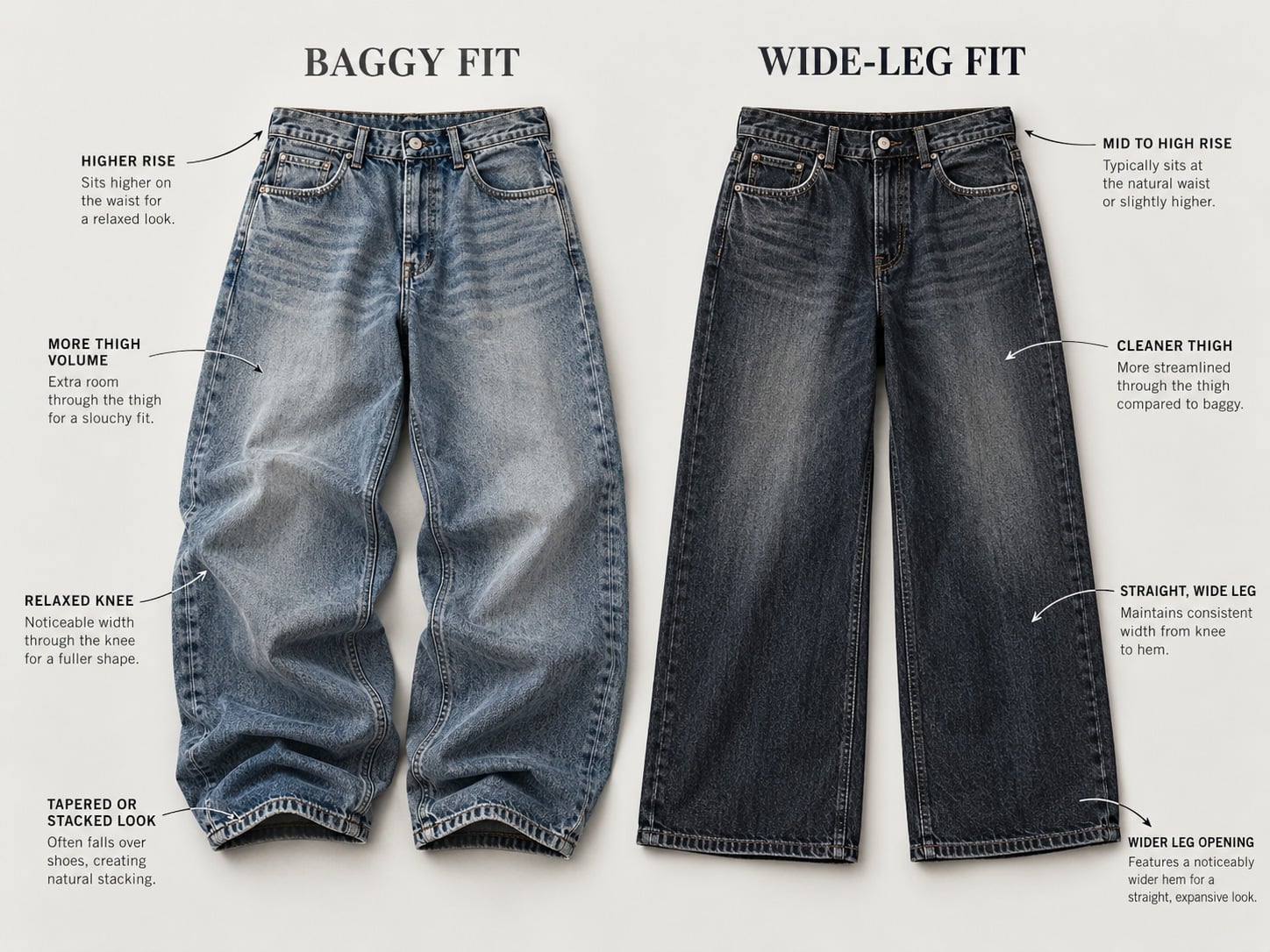
Figure 1. baggy denim compared with a wide-leg silhouette.
Baggy jeans emphasize generous room around the seat, thighs and knees. A slightly dropped crotch, relaxed hip measurement and additional length can create the loose, stacked shape associated with skatewear and early-2000s fashion. However, baggy does not automatically mean extremely oversized. A well-developed pattern balances thigh volume, rise and leg opening so the garment looks intentional rather than simply too large.
For skate-inspired products, freedom of movement and a natural break over sneakers are often priorities. Y2K designs may add lower-rise styling, vintage fading or reconstructed seams to reinforce the overall character.
Wide-leg jeans focus on a broad leg line from the upper thigh toward the hem. Compared with many baggy styles, the silhouette often appears straighter and more architectural, with less pooling around the knee. The actual fit depends on the hip, thigh, knee and hem measurements—not on the product name alone.
For Japanese archive and contemporary streetwear collections, a controlled wide-straight shape works well with cropped jackets, oversized hoodies and boxy T-shirts. A medium-rise waist and balanced front and back rise can keep the garment comfortable while retaining a defined line.
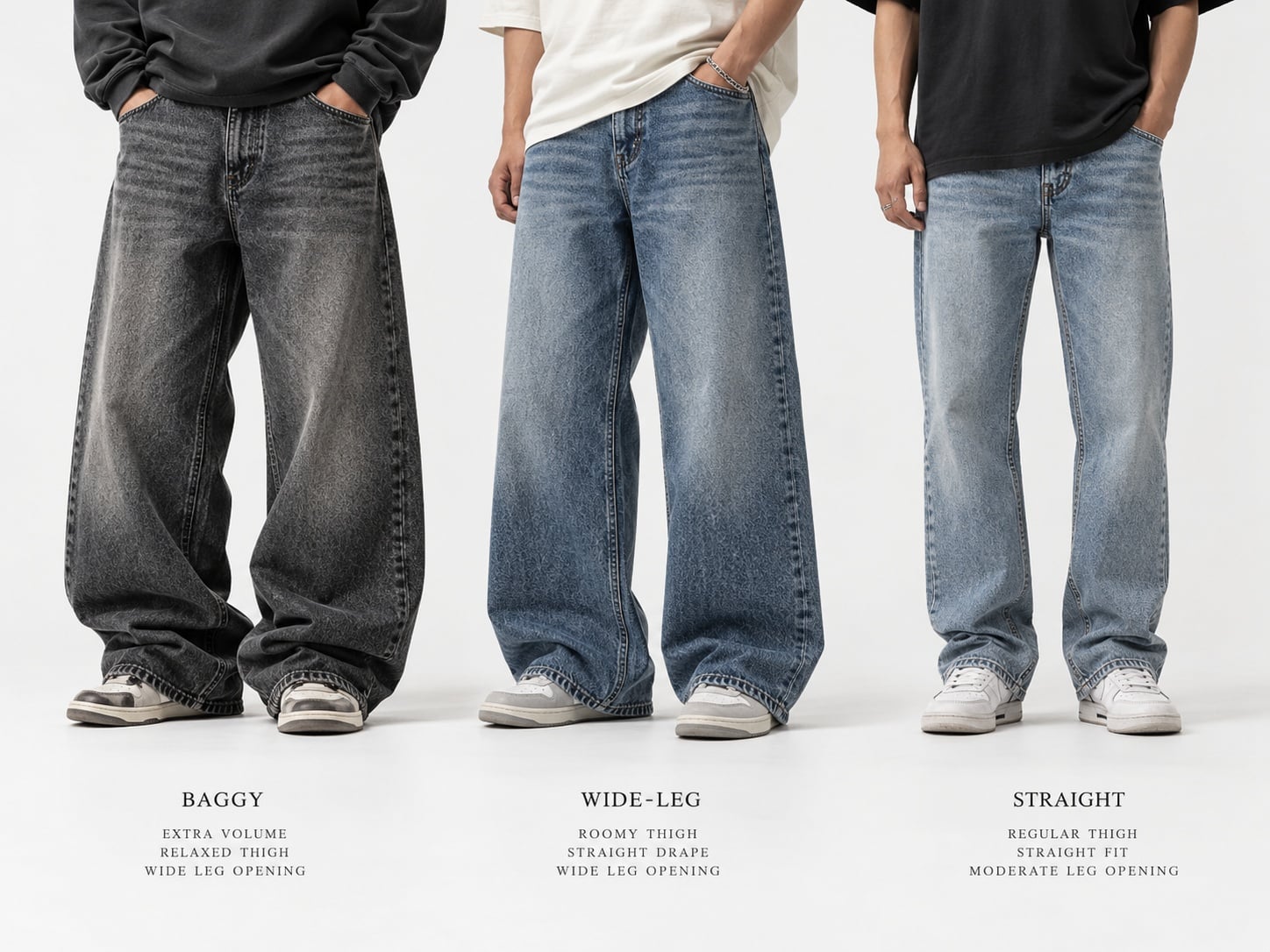
Figure 2. styling reference showing baggy, wide-leg and straight denim fits.
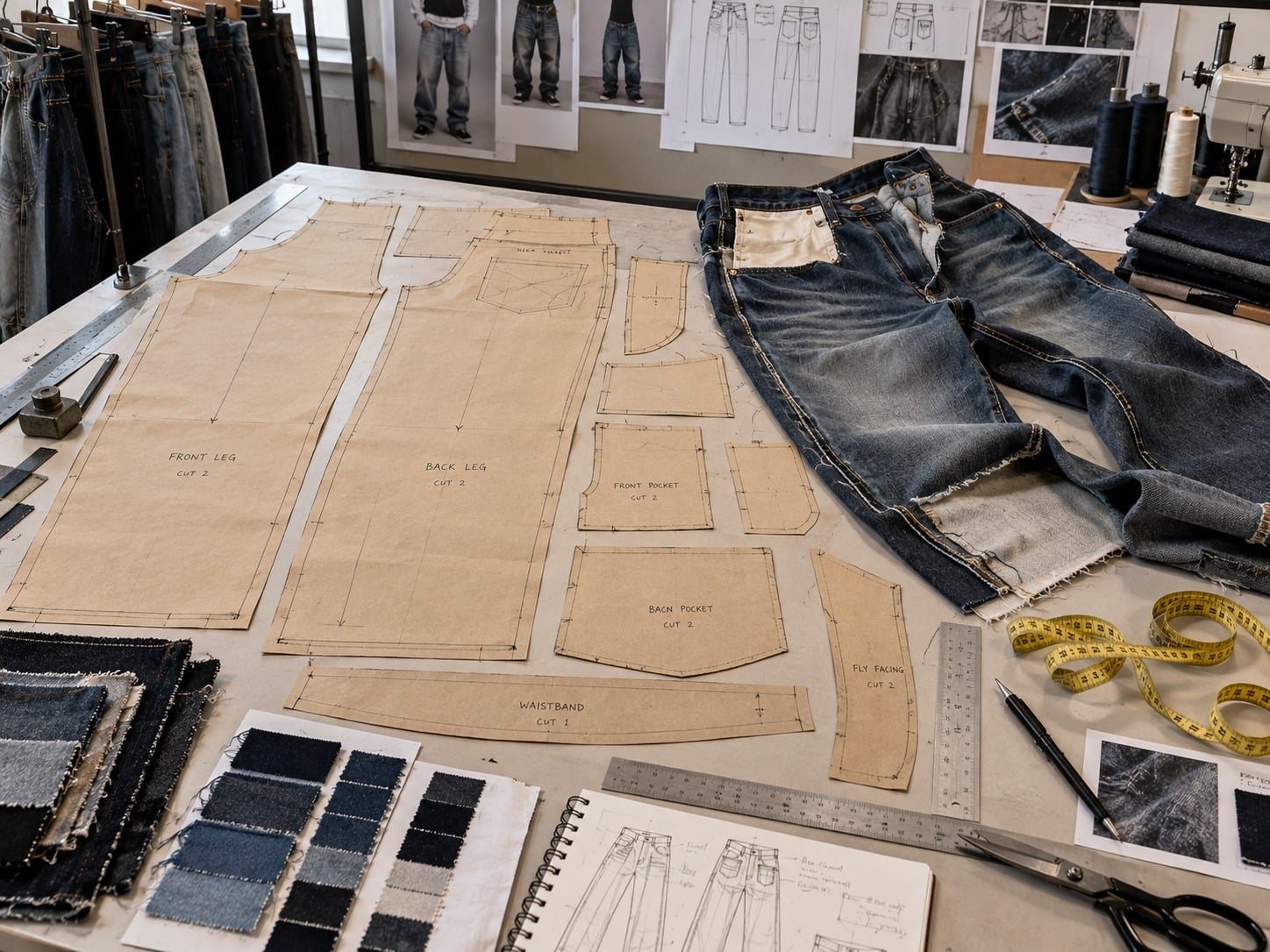
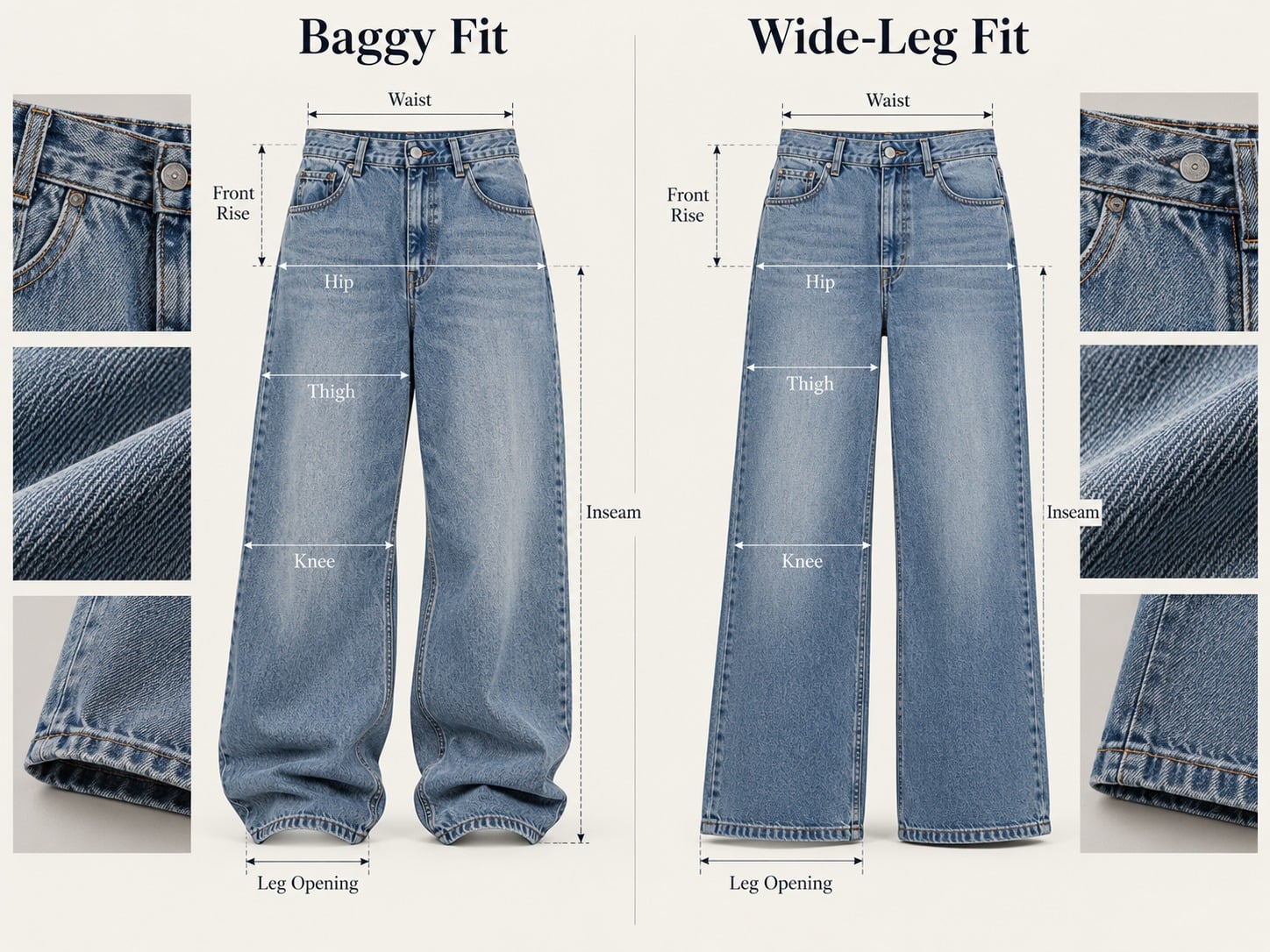
The most important decisions happen before the denim is cut. Pattern makers establish the waist, front rise, back rise, hip circumference, thigh width, knee width, inseam and leg opening. Changing one measurement may alter the entire visual balance. For example, increasing the thigh without adjusting the knee can produce an unwanted balloon effect; shortening the inseam can remove the stacked look requested by a brand.
A dependable development process starts with a clear tech pack and a reference sample. The factory then produces a first pattern, checks fit on the intended size, and refines proportions after wear testing. A graded size set should preserve the design intent across the range.
Before bulk production, compare actual garment measurements rather than relying on labels such as “oversized” or “relaxed.” Confirm the waist and hip, front and back rise, thigh width measured at a defined point, knee width, leg opening and inseam. Specify whether measurements are taken before or after washing, and set tolerances for approved production.
Also evaluate side-seam position, pocket placement and the way the hem falls over footwear. Two jeans with identical leg openings can look very different if the rise, thigh or inseam changes. A physical fit sample is the best way to check the combined effect.
Fabric selection also shapes the result. Mid- to heavyweight cotton denim, often around 11–14 oz for substantial streetwear styles, offers structure while softening with wear and washing. Lighter fabric creates more drape, while heavier denim may help a wide-straight leg hold its shape. Weave, finishing and fabric composition matter alongside ounce weight.
Stone washing, enzyme washing, abrasion and localized fading can give both fits an authentic worn appearance. Since finishing can cause shrinkage, wash tests and post-wash measurements should be completed before final pattern approval. Reinforced stress points, strong pocket construction and consistent stitching help protect quality in everyday use.
Choose baggy denim when your concept calls for relaxed volume, movement and a skate-influenced attitude. Choose wide-leg denim when you want a cleaner, continuous leg shape suited to modern archive styling. Neither is universally better: the right choice depends on your brand identity, target customer, footwear styling and intended price position.
At Youmi Clothing, our OEM/ODM development approach brings together pattern refinement, fabric sourcing, wash development and production coordination to help brands translate concepts into manufacturable garments. Share your sketches, tech packs or sample references to discuss the fit and construction needs of your next custom denim collection.
 Hot News
2026-11-10
2026-11-05
2026-11-03
2026-10-30
2026-10-23
2026-10-13
Youmi Clothing (Dongguan) Co., Ltd. provides custom OEM/ODM streetwear manufacturing for global brands. 24+ years’ expertise, ISO/BSCI/OEKO-TEX certified, 5-step QC, fast sampling. Trusted by Red Bull & Ekko Vision. Request a quote today.
No. 1 Fusheng Rd, Baisha 3rd Village, Humen, Dongguan, Guangdong, China
Copyright © 2026 Youmi Clothing (Dongguan) Co., Ltd. All rights reserved. Privacy Policy

 EN